Boeing Expands Investment in Future Workforce through FIRST

National Partnership Fosters Innovation and Increases the Audience for Robotics Competitions

CHICAGO, Feb. 27, 2009 -- The Boeing Company [NYSE: BA] today announced a four-year national partnership with FIRSTTM (For Inspiration and Recognition of Science and Technology), valued at $4 million, to encourage students to explore careers in math and science. This expanded relationship builds upon an ongoing commitment by Boeing employees to help shape the future of technology innovation in the United States.

FIRST is a not-for-profit organization, founded in 1989 by inventor Dean Kamen, to inspire young people to participate in science and technology. Beginning in January, teams of high school students collaborate with adult mentors during an annual six-week period to design, build and program robots from a common kit of parts for competition.

"We view the excitement created by FIRST as an opportunity to positively influence the perception of math and science by young people," said Rick Stephens, Boeing senior vice president of Human Resources and Administration. "For more than 10 years, our employees have inspired participants through their experience applying teamwork and technical skills to creatively solving complex problems. Expanding our involvement with FIRST will help us encourage more students to experiment with technology and make new discoveries as the future workforce of our industry."

LUNACYTM, the 2009 competition challenge, commemorates the 40th Anniversary of the Apollo 11 mission by staging all events on a low-friction floor to simulate gravity on the moon. During the match, teams recall the discoveries from the first manned mission to land on the moon as they maneuver robots to toss nine-inch "moon rocks" into trailers. FIRST attaches these moving targets to robots designed by the opposing teams as part of the challenge.

"Connecting FIRST teams with Boeing, a company involved in the future of space exploration, will assist us in preparing the next-generation for meeting the economic, environmental and business challenges ahead," said FIRST Founder Dean Kamen. "We are honored Boeing chose FIRST as a partner to help develop its future workforce. The company is committed to producing innovative scientists, engineers and technicians, and these future leaders are in our schools right now at every grade level."

The FIRST Board of Directors recently recognized Boeing as one of nine "Strategic Partners" dedicated to helping the organization further its mission to reach young minds. This designation reflects the company's national, multi-year partnership with FIRST to encourage emerging talent to innovate with math and science.

FIRST is part of a comprehensive investment Boeing makes annually to education initiatives that focus on teacher and leadership development, as well as curriculum enhancements. Projects supported by Boeing reflect a clear set of criteria that emphasize the application of new approaches to solving critical community issues.

About FIRST:
Accomplished inventor Dean Kamen founded FIRST (For Inspiration and Recognition of Science and Technology) in 1989 to inspire an appreciation of science and technology in young people. Based in Manchester, N.H., FIRST designs accessible, innovative programs to build self-confidence, knowledge, and life skills while motivating young people to pursue opportunities in science, technology, and engineering. With the support of many of the world's most well-known companies, the not-for-profit organization hosts the FIRST Robotics Competition and FIRST Tech Challenge for high-school students, the FIRST LEGO® League for children 9-14 years old, and the Junior FIRST LEGO League for 6 to 9 year-olds. Since its beginning, FIRST has had a positive impact on students and academic communities. Participating high-school juniors and seniors are eligible to apply for $9.7 million in scholarships from leading universities, colleges, and companies. To learn more about FIRST, go to www.usfirst.org.

About Boeing:
Boeing is the world's leading aerospace company and the largest manufacturer of commercial jetliners and military aircraft combined. Additionally, Boeing designs and manufactures rotorcraft, electronic and defense systems, missiles, satellites, launch vehicles and advanced information and communication systems. As a major service provider to NASA, Boeing operates the Space Shuttle and International Space Station. The company also provides numerous military and commercial airline support services. Boeing has customers in more than 90 countries around the world and is one of the largest U.S. exporters in terms of sales.


Saturday, February 28, 2009 | Posted in | Read More »

V Australia considers slowing its 777 deliveries

By Victoria Moores

Virgin Blue's new long-haul start-up V Australia has taken delivery of its third Boeing 777-300ER but it is considering postponing some of the remaining aircraft which it has on order.

V Australia's inaugural flight departed Sydney on 27 February and touched down in Los Angeles at 09:37 the same day. The flight was operated by V Australia's first 777-300ER, registered VH-VOZ. The start-up has six of the type on order and is sourcing a seventh on lease from International Lease Finance (ILFC).

Speaking to ATI during the inaugural flight, Virgin Blue CEO Brett Godfrey said: "We've had our third aircraft delivered today. We've taken three aircraft in three weeks. The fourth one comes in June and is scheduled to open our Melbourne-Los Angeles service."

But Godfrey adds: "It's clearly the lousiest time ever to launch an airline. In airline history this is equal to picking 10 September 2001 as a launch date. We made the decision three years ago when the world was a different place. The sweet spot has clearly gone pretty sour at the moment."

The start-up is due to take its next three aircraft in February, April and October 2010, although this plan may be adjusted in line with the economic climate. Godfrey says: "We may well look to slow those down, at least one or two of them."

V Australia has options on a further six aircraft which kick in from 2011 at the rate of two aircraft per year.

Godfrey adds: "[Virgin Blue] is looking at talking with Boeing about moving all our future aircraft deliveries. We have 20 aircraft on order and our objective is to look very closely at that. I personally think this year will be tough and 2010 will be okay, but if we can delay the deliveries it would be irresponsible not to."


Saturday, February 28, 2009 | Posted in | Read More »

Prosecutors seek 737 recorder data as other judicial intrusions draw fire

By David Kaminski-Morrow

Prosecutors in the Netherlands have requested flight-data recorder and cockpit-voice transcripts from the crashed Turkish Airlines Boeing 737-800 at Amsterdam Schiphol.

The Openbaar Ministerie says the Dutch Safety Board does not have to grant the request, contained in a letter from its aviation department, because the prosecutor is "lacking" a legal basis. But it adds that it has submitted the letter because the data can give "an insight into the circumstances of the accident".

"We are awaiting a response from the Safety Board," says the prosecutor's office.

Judicial intrusion into accident investigation has attracted high-profile criticism over the last few days, after the Italian Agenzia Nationale per la Sicurezza del Volo sought "decisive action" to avoid the "problem of conflict" between investigators' needs and the rules of criminal proceedings.

ANSV has accused judicial authorities of hampering the investigation into the fatal 7 February crash of a Cessna 650 executive jet in a suburb of Rome. It says the inquiry has "come to a standstill" after the seizure of crucial material, including the flight recorders and relevant "vital" documentation, by legal officials.

The Italian agency adds that the US National Transportation Safety Board has requested a copy of data on the recorders but that, as a result of the development, ANSV has been unable to provide the information.

Cockpit crew representatives are supporting the ANSV's stance, and backing calls for a change in Italian law to give technical investigation priority over judicial inquiries.

"Under present legislation the judicial inquiry takes precedence," says the International Federation of Air Line Pilots' Associations.

Absence of data from the flight-data and cockpit-voice recorders from the Cessna jet will "seriously impact the effectiveness and speed" of the investigation, it adds.

Prosecutors have also "interfered" with French inquiries into last November's fatal Airbus A320 crash in the Mediterranean Sea, claims the Flight Safety Foundation. "In recent days the French authorities have returned some of the Airbus evidence to safety investigators," it states.

Chief executive William Voss says he understands the demand for justice and accountability. But he adds: "We cannot allow the safety of the aviation system to be jeopardised by prosecutorial overreach.

"Unless there is evidence of sabotage, law enforcement and judicial authorities need to step aside, allow accident investigators immediate access to the wreckage and to surviving crew and passengers, and let safety professionals do their job."


Saturday, February 28, 2009 | Posted in | Read More »

Cyprus Airways scrapes full-year profit

By David Kaminski-Morrow

Preliminary Cyprus Airways results indicate it achieved a full-year net profit of €1.74 million ($2.2 million) last year, a rise on the previous figure of €1.16 million but slim margin on its €311 million revenues.

These revenues were up nearly 8%, which Cyprus Airways attributes to an increase in passenger numbers as well as fuel surcharges.

Operating expenses rose nearly 10%, however, and operating profit fell from €5.4 million to €1.9 million at 31 December 2008. Fuel expenditure was up by 42% to €97 million.

"Cyprus Airways operates in a highly-competitive environment which has become even more unfavourable as a result of the global financial crisis," says the airline.

It stresses that peace in labour relations is the "cornerstone" of its plans for survival and stable development.

Cyprus Airways says it has "sufficient liquidity" to meet obligations without drawing on short-term banking facilities, and adds that its fleet renewal efforts - including sale of three older aircraft and the lease of newer jets - will bring "significant economic benefits".

But it says the uncertainty of the current economic downturn is preventing it from making any accurate forecasts for 2009.


Saturday, February 28, 2009 | Posted in | Read More »

France closing on structure of tanker deal: AirTanker

By Max Kingsley-Jones

Airbus Military and its partner AirTanker are hopeful that long-running dialogue with the French air force about the replacement of its tanker fleet is close to reaching the point where the structure of any acquisition deal will be finalised.

France has 14 ageing Boeing KC-135 tankers and EADS's Airbus A330-based multirole tanker transport is seen as a likely lead candidate to replace them from 2015.

The EADS UK-led AirTanker consortium is supplying 14 A330 tankers to the UK Royal Air Force for its Future Strategic Tanker Aircraft requirement under a £13 billion ($18.3 billion) private finance initiative deal. Chief executive Phillip Blundell says AirTanker has held "quite a lot of dialogue with the French to help them to understand what we've done on the RAF programme and to see how it would, or would not, suit them".

Speaking at an event at Airbus's Broughton, UK plant to mark the shipment of the first RAF A330 tanker's wings to Bremen for equipping, Blundell said: "I get the sense that the French are getting ready to make a decision, at least on the procurement methodology if not necessarily the timescale."

Airbus Military's head of defence capability marketing Pete Scoffham says that while the "PFI route" is available should the French want it, "we'd prefer them not to, as it is extremely complex".

EADS Casa tanker project director Antonio Caramazana says negotiations have been ongoing with France for the "last four or five years", and that its requirements depend on "their needs and their budgets. Currently they've got 14 aircraft and they would like to replace one-for-one."

Blundell adds that the requirement is to provide "somewhere between six and 14 aircraft".


Saturday, February 28, 2009 | Posted in | Read More »

787-8 may fail to meet initial specs

By Brendan Sobie

Aeromexico fears the Boeing 787-8, which it now expects to begin receiving in 2012, may fail to meet original performance specifications including the ability to operate non-stop flights from Mexico City to Asia.

CEO Andres Conesa says Aeromexico decided to acquire five 787-8s in 2005 assuming the aircraft could operate its Shanghai, Tokyo and Rome services non-stop. But he says the carrier is now unsure if Boeing will be able to meet the specs outlined in its 787 contract.

"The expectation was that plane could go all the way to Greece," Conesa told ATI in an interview yesterday at Aeromexico's Mexico City headquarters. "It has changed. Today we don't know the final conditions." The distance between Mexico City and Athens is roughly 7,000 nautical miles.

A Boeing spokeswoman declined to directly address Conesa's comments, explaining the airframer has "ongoing conversations with each of its customers on their requirements and as a matter of company policy we do not comment on those discussions".

Aeromexico now routes its Boeing 777 Shanghai and Tokyo services via Tijuana while its Boeing 767 Rome service stops in Monterrey. Conesa says the 777 can operate Mexico City-Rome but is too large for the route, while no aircraft currently in production can operate from the high altitude of Mexico City to Asia non-stop.

"Ideally we would fly it non-stop but there is no plane in the market," he says. "Depending on the final version of the 787 maybe we can provide the service non-stop."

Conesa says Aeromexico will also have to wait two more years for the 787-8 than initially scheduled.

"Originally we were scheduled to receive the first one in 2010 and we were going to complete the transition [from 767s to 787s] in 2012," he says. "With the new calendar we'll probably complete the transition by 2014."

But Conesa adds Aeromexico potentially could move up in the queue if other 787 customers elect to defer their deliveries. "Carriers are probably revaluating things," he says.

Even if the 787 is not able to operate from Mexico City to Asia and all of Europe non-stop, Conesa says Aeromexico remains committed to the aircraft. "We are long-term partners and have a very good relationship with Boeing. I'm sure they will be able to do their best," he says.

"The 787 will be a very good plane for sure. It's a shame it has been delayed. But I think it will be worth the wait."

Aeromexico's long-haul fleet now consists of four 777s and six 767s. Three of the carrier's 787-8s are being supplied by ILFC while the other two are being acquired directly from Boeing.


Saturday, February 28, 2009 | Posted in | Read More »

NTSB blames controllers for three near-misses

By John Croft

The US National Transportation Safety Board (NTSB) has found that errors by air traffic controllers were the probable causes of three recent near-misses, according to final reports on the events.

An early afternoon 21 July incident at Chicago O'Hare International Airport resulted in an arriving Learjet 60 business jet passing 99m (325ft) above and slightly behind an American Eagle ERJ145 on departure from an different runway. The NTSB says the controller failed "to ensure the appropriate separation between two airplanes operating on runways where flight paths intersect".

A 28 August night-time near-miss at Fresno, California occurred when a tower controller failed "to ensure the runway was clear" after a six-passenger Piper Malibu private aircraft landed before allowing a Skywest CRJ200 to land. Compounding the situation was the Malibu pilot's unfamiliarity with the airport layout.

The Skywest pilot told investigators he was forced to steer to the right side of the runway as the CRJ decelerated under braking and full reverse-thrust in order to avoid the Malibu, which had failed to leave the runway on a left-side taxiway.

In a similar 19 September night-time incident at the Lehigh Valley International Airport in Pennsylvania, a Mesa Airlines CRJ700 on takeoff narrowly avoided a Cessna 172 that had landed previously and not turned off the runway as rapidly as controllers had intended.

The Mesa crew estimated that the two aircraft missed one another by approximately 3m as the CRJ decelerated through 40kt after aborting the takeoff.

NTSB puts primary responsibility for the near miss on both tower controllers, who failed to "maintain awareness of the position of (the Cessna) and ensure that the aircraft was clear of the runway before issuing a takeoff clearance to the (CRJ)".


Saturday, February 28, 2009 | Posted in | Read More »

Schiphol crash pilot's death draws cockpit door scrutiny

By David Learmount

The Turkish Airlines Boeing 737-800 crash on approach to Amsterdam Schiphol airport is the first survivable incident in which the anti-hijacking cockpit security door was shown to be a hazard for pilots.

Turkey's main English language newspaper Hurriyet has reported an on-scene witness statement that one of the pilots survived the crash even if badly injured, but he was not rescued in time to save his life.

Rescue teams eventually had to recover the bodies of the three pilots - one was traveling in the jump-seat - by cutting through the cockpit roof.

"According to the eye-witnesses and passengers, first aid came 40 minutes after landing," said Ziya Yilmaz, Turkish Air Line Pilots Associaton (TALPA) president tells ATI. "The first officer was screaming and waiting 40 minutes for rescue. We will inform IFALPA and ask why?"

The Dutch Safety Board says it cannot comment on the allegations in the Hurriyet report, adding that it is investigating all scenarios, including the Turkish Airline Pilots Association allegation that wake vortex from a previous aircraft may have contributed to the accident. The Board added that more information may be available "after the weekend".

The Hurriyet report, quoting Turkey's Dogan news agency, says that Ismail Akyuz, a Turkish man living in Amsterdam, and his wife were travelling along the main road near the airport when the aircraft came down in fields close to them.

Akyuz told Hurriyet: "We took notice of the plane after we realised it was Turkish." The two crossed the field in which the aircraft had come to a halt, says the report. Akyuz described to Dogan what they found: "I saw the hand of the pilot in the front part of the plane. He was in the throes of death. When I arrived he was still alive but couldn't move. I heard him noisily breathing.

Akyuz continued: "When we first arrived at the scene we saw people lying on the ground injured. Some of them had broken legs... I entered the fuselage from one of the open doors and walked to the back part of the plane. There were couple of people there and we helped them to get out." He also commented: "It took around 20 minutes before the rescue teams got to the scene as a secondary road leads there." The Safety Board said it is unable, at present, to provide the time it took for the crash rescue team to arrive at the accident scene. Runway 18R is the furthest of the runways from the main part of Schiphol airport, and the wrecked hull was about 1km short of the runway threshold outside the airport boundary.

Dutch authorities have also been unable to confirm whether the rescue teams were able to determine whether the cockpit crew were dead when they reached the accident scene. But they concentrated first on evacuating badly injured survivors because they could not penetrate the cockpit door.

"The cockpit doors changed after 9/11," says TALPA's Yilmaz. "But in the crashes, how will the pilots be rescued from the cockpit?"

The seven-year-old 737 (TC-JGE) crashed while inbound from Istanbul, Turkey on 25 February. It came down in open fields on short final approach slightly to the left of the extended centreline. Accident investigators say that initial download from the flight data recorder shows it had "very low" forward speed. This fact is borne out by the extremely short skid marks on the ground before the hull came to rest.

The aircraft hit the surface in landing configuration, and witnesses say the nose was very high. The investigators confirm the tail hit the ground first, partly severing it, and the aircraft had a high vertical speed, which accounts for the nine fatalities and a large number of serious injuries among the seven crew and 127 passengers.


Saturday, February 28, 2009 | Posted in | Read More »

Lockheed Outlines Test Plans For JAGM Bid

Amy Butler/Orlando, Fla. abutler@aviationweek.com

Lockheed Martin is planning a series of three flight-tests next year of its entrant into the U.S. Army's Joint Air-to-Ground Missile (JAGM) design competition.

These three test vehicles and three spares are being manufactured now, says Frank St. John, director of the company's JAGM program, which is managed by the company's Missiles and Fire Control unit here.

JAGM is to be a 100-pound class small weapon designed for use against small moving or fixed targets by rotary-wing and fixed-wing aircraft. It will replace the Maverick, Hellfire, Hellfire Longbow variant and TOW weapons now in use by the Army and Navy and will be required to engage and destroy tanks, armored personnel carriers and fast boats, among other targets.

Lockheed Martin, the incumbent winner of JAGM's ancestor program, the Joint Common Missile (which was terminated during a budget drill), is taking on a team of Raytheon and Boeing. The two teams received competing technology development contracts worth about $120 million last fall.

St. John says by the time of the downselect in January 2011, Lockheed will have built nearly 50 tri-mode seekers, which are considered to be the most technologically complex element of the system. These units have been developed under the JAGM program as well as earlier technology contracts with the research labs.

Also, Lockheed is teamed with Boeing, its JAGM rival, on a bid for the U.S. Air Force Small Diameter Bomb (SDB) II, a 250-pound weapon designed to hit moving targets in all sorts of weather. Lockheed is providing the seeker for the SDB II bid, with Raytheon the sole competitor against the pair. A downselect is expected on that program this fall.

JAGM, with a 7-inch diameter, however, requires a smaller seeker head than SDB II.

St. John says Lockheed has already acquired experience developing each of the three modes separately, with the Longbow using millimeter-wave radar, the Hellfire using a semi-active laser and passive imaging infrared on Maverick, St. John says. He says that experience will allow the company to integrate the three at low cost, though he declined to give the price of the proposed JAGM system.

Already 14 sensors have been built under the JCM program by Lockheed. Another seven have been built for the SDB II risk reduction, he says. The team is using about 120,000 lines of software that were developed under JCM prior to its termination.

The warhead, at roughly 20 pounds, will have two kill mechanisms - blast fragmentation for targets such as trucks, boats or buildings, and a shaped charge for armored targets like tanks.

Preliminary design review is set for the middle of 2010. Platforms expected to carry the system include the AH-64 Apache family of helicopters, AH-1Z Super Cobra, SH-60 Seahawk, and the F/A-18 E/F Super Hornet.

Artist's concept: Lockheed Martin


Saturday, February 28, 2009 | Posted in | Read More »

Romanian Plane Makes Emergency Landing, 51 Safe

A Carpatair Saab 2000 plane with 51 people on board made an emergency landing in Romania on Saturday.

All 47 passengers and four crew on board were safe an official said.

The pilots were forced to make an emergency landing in Timisoara after circling the airport for two hours to use up fuel. Reports indicate that there was a problem with the front landing gear.

The Saab 2000 landed nose-down on a foam cushion spread on the runway to avoid fire.

The BBC reported that most of the 47 passengers on the plane, which had been flying from the Moldovan capital Chisinau to Timisoara, were Romanians or Moldovans.

Nine Italians, two Greeks and two Germans were also aboard, Romanian border police said.

Romanian accident investigators were sent to the scene.


Saturday, February 28, 2009 | Posted in | Read More »

Pilots Say Turbulence Likely Reason For Schiphol Crash

Turbulence created by a large plane landing at Amsterdam just ahead of a Turkish Airlines Boeing 737-800 may be the most likely reason it crashed, a Turkish pilots' association said.

Five Turks and four Americans were killed when the 737 crashed into a field short of the runway at Schiphol Airport on Wednesday. Among the dead were three pilots and a flight attendant.

A Boeing 757 appeared to have landed on the same runway just two minutes before the Turkish Airlines (THY) plane, the Turkish pilots' association (TALPA) told a news conference.

"Wake turbulence", an air turbulence created by a pair of vortices trailing in the wake of an aircraft's wing tips, could have hit the descending Turkish plane, preventing it from continuing to fly, the group said.

TALPA Vice Chairman Mete Dane demonstrated flight TK 1951's approach to Schiphol and said the reason why it had suddenly lost altitude pointed to wake turbulence.

The Schiphol control tower should issue full information about planes landing on the runway, the landing intervals, and what communication took place, he said.

A Dutch Safety Board spokesman said wake turbulence was one of the options its investigators were looking at.

"We look at all options and we certainly are not excluding this one," spokesman Fred Sanders said.

It was not clear if a Boeing 757 had actually landed just before the Turkish Airlines plane, he said.

A Schiphol spokeswoman declined to comment on any speculation while the cause of the crash was being examined.

BLACK BOXES EXAMINED

TALPAS's Dane said: "We do not have exact information about the distance between the planes and we do not know if our plane has been warned about the situation. But according to the records we have seen, no mention of it is made."

"We want Dutch Aviation Authorities to be neutral and release all information, including any which might relate to them."

Experts are examining the flight recorders from the plane, which are now in Paris, where French authorities are providing technical assistance. The Dutch Safety Board expects to present a preliminary conclusion of the investigation next week.

A THY plane carrying some of those injured in the crash arrived in Istanbul on Friday.

The company said the pilots who died were Captain Hasan Tahsin Arisan, Murat Sezer, Olgay Ozgur and flight attendant Ulvi Murat Eskin.


Saturday, February 28, 2009 | Posted in | Read More »

Iberia Doubles Capacity Cuts As Demand Dives

Iberia will cut more than double the number of seats originally planned this year, the carrier said on Friday, just a month after first announcing a capacity reduction as recession hits demand.

"With the situation that we are seeing, we believe it is appropriate to rapidly cut supply," Chairman Fernando Conte told journalists as Iberia presented 2008 results.

Spain's biggest airline said it could cut supply by as much as 4 percent this year compared to the 1.7 percent reduction outlined in its three-year strategic plan, presented to analysts in January.

Iberia confirmed earlier on Friday it made an operating loss of EUR79 million euros (USD$100 million) last year as weakening demand in the second half prevented it handing on spiraling fuel costs.

The airline, which is in merger talks with British Airways, said net profit fell 90 percent to EUR32 million.

In the fourth quarter it made a net loss of EUR19 million, having made a EUR105 million profit for in the October-December period a year earlier.

Income fell 1.3 percent to EUR5.45 billion, while earnings before interest tax, depreciation, amortization and aircraft rentals (EBITDAR) was down 46 percent to EUR500 million.

PROFIT STILL EYED, MERGER ON TRACK

Conte said he continued to believe the airline would make its 14th straight annual profit in 2009 although he warned that earnings visibility was extremely foggy.

To contain costs, the chairman said Iberia was studying accelerating a program of early retirements and would temporarily lay off workers at its cargo division. Cost cutting will be aided by a fall in the price of fuel.

Last year the spiraling cost of crude lifted its fuel bill by almost EUR500 million to EUR1.67 billion, but this year that bill should fall by EUR300 million as long as oil remained at around USD$50, Conte said. A barrel cost USD$43 on Friday.

Conte reiterated that March would be a decisive month in the conclusion of merger talks with BA.

He said that BA's large pension deficit, which has complicated the merger would not derail a deal. "The pension plan deficit will not affect the resulting company, it will be the responsibility of BA and its employees," he said, adding that the deficit could be filled through one-off contributions.

He said the two had still to decide where the joint-carriers' headquarters would be, though both will retain different operating headquarters.


Saturday, February 28, 2009 | Posted in | Read More »

Lufthansa Says No AUA Deal Without Full EU OK

Lufthansa would drop its offer to buy Austrian Airlines (AUA) if the European Union did not approve all the conditions, its chief executive said on Friday.

When asked what would happen if Brussels did not okay the full EUR500 million euros (USD$633.8 million) in debt that the Austrian state would assume, Wolfgang Mayrhuber said: "Then the deal would collapse."

The Lufthansa CEO recently said he was not considering amending the offer but this marks the first time he said he would refuse to accept any changes to the terms by the EU.

His comments came shortly after the airline formally submitted its takeover offer for AUA at the announced price of 4.49 euros per share. The acceptance period opens on March 2 and expires on May 11, Lufthansa said on Friday.

European airlines including Air France-KLM and British Airways are seeking tie-ups to better weather the economic downturn and slumping demand.

In December, Lufthansa signed a deal to buy the loss-making Austrian carrier, expecting the move to make it Europe's biggest airline.

Under the deal, Lufthansa agreed to buy Austrian state holding company OeIAG's 42 percent stake in AUA and take over the airline completely for up to EUR377 million (USD$479 million).

The transaction, which needs European Commission approval, also involves the Austrian state assuming around EUR500 million of AUA debt.

The European Commission has said it had doubts on whether the amount of aid had been kept to a minimum and whether Austria's restructuring plan would restore AUA's long-term viability without the need for more funds in the future.


Saturday, February 28, 2009 | Posted in | Read More »

Rolls-Royce Signs USD$1.2 Bln Deal With China's HNA

Rolls-Royce on Friday signed a USD$1.2 billion agreement to supply airline engines to China's HNA Group.

Rolls-Royce will supply Trent 700EP engines to power Hong Kong Airlines' new fleet of 20 Airbus A330s, the British company said in a statement. The deal includes a long-term service agreement.

The deal was signed as China's Commerce Minister Chen Deming met Britain's Business Secretary Peter Mandelson in London, and follows a trade visit by Chinese Premier Wen Jiabao to London in early February.

"This high-profile mission, sent so soon after the China-UK business summit, shows how highly the Chinese value their trade with the UK, and demonstrates their commitment," said Mandelson.

HNA is a major shareholder in Hong Kong Airlines.


Saturday, February 28, 2009 | Posted in | Read More »

Brasil - As obras atuais do programa espacial no MA configuram invasão de terras quilombolas?

A Folha de São Paulo perguntou para duas pessoas, com visões distintas, o que elas acham da questão das terras quilombolas próximas à Alcântara. Leia os argumentos abaixo de cada lado.

SIM

IMAGINADA pelos militares nos anos 1980 como um “vazio demográfico”, Alcântara torna-se um problema -jurídico e fundamentalmente social- a partir da Constituição de 1988, que garantiu aos chamados remanescentes de quilombos o direito a titulação de seus territórios.


Em 2000, a Fundação Palmares reconheceu o território étnico de Alcântara, integrado por mais de 150 comunidades, onde residem e trabalham cerca de 17 mil pessoas. Vivem da pesca, da agricultura, do extrativismo. Sua economia se baseia no uso comum dos recursos, de acordo com o que a legislação nacional e a internacional reconhecem como populações tradicionais. São grupos protegidos por lei pelo fato de sua dinâmica interna representar um patrimônio social e cultural contemplado na Constituição Federal (artigos 215 e 216 e artigo 68 do ADCT - Ato das Disposições Constitucionais Transitórias) e na Convenção 169 da OIT (Organização Internacional do Trabalho), da qual o Brasil é signatário.


Nos anos 1980, 312 dessas famílias foram retiradas compulsoriamente dos seus lugares, à beira do oceano, e instaladas nas agrovilas, onde não podem se reproduzir material e socialmente, pois tais áreas são distantes do mar e constituídas de solos arenosos. Ainda hoje não têm títulos das terras e das casas a elas entregues pela Aeronáutica e os jovens casais são proibidos de aí edificar novas residências. Tal situação conforma um processo de limpeza étnica, pois os jovens são obrigados a migrar para as periferias de Alcântara e de São Luís, proibidos de viver nos territórios de ancestrais.


O Brasil responde hoje na Câmara Interamericana de Direitos Humanos da OEA (Organização dos Estados Americanos) pelo fato de ter tratado esses brasileiros como cidadãos de segunda categoria, além de ter provocado uma grave desestruturação ambiental e social no município como um todo. Há também uma ação interposta na OIT no mesmo sentido. Atualmente, as famílias que permaneceram no litoral do município são atingidas pela ação de empresas ligadas à Alcântara Cyclone Space, binacional brasileiro-ucraniana. Em 2008, passados oito anos da instauração de uma ação civil pública no âmbito da qual se cobra do Estado Brasileiro a titulação do território quilombola de Alcântara, empresas contratadas pela ACS invadiram os povoados do litoral onde pretendiam implantar três sítios de lançamento.


Ali realizaram inúmeras perfurações, suprimiram vegetação sem licença do Ibama e destruíram caminhos, roçados e margem de rios. Ameaçadas em suas condições de existência, as famílias reagiram instalando barreiras e obrigando a empresa a se retirar. No final de 2008 foi homologado judicialmente um acordo acerca da titulação do território. As empresas não realizariam obras no território quilombola, recuando para dentro dos 8.700 hectares já detidos pelos militares. As partes se comprometiam a não recorrer da decisão. Agora, o Gabinete de Segurança Institucional solicita a instauração de uma câmara de conciliação perante a AGU (Advocacia Geral da União), desrespeitando aquela decisão judicial.


Toda e qualquer reação dessas comunidades à entrada das empresas em seus povoados hoje deve ser entendida à luz de acontecimentos que atravessam três décadas -e não pode ser qualificada simplesmente de intransigência. São quase 30 anos de violência, de descumprimento da legislação, de desrespeito a acordos lavrados em cartório ou estabelecidos judicialmente.

Nesses lugares, a luz elétrica e o telefone chegaram há apenas dois anos. Nas agrovilas, famílias foram separadas, sua soberania alimentar foi duramente atingida, a realização de festas e rituais foi seriamente comprometida e foi suprimido o contato com os cemitérios antigos.


Após tanta violência, o governo deve estabelecer diálogo pautado no respeito a esses grupos. Assim sugeriram os quilombolas, propondo reunião que seria realizada no último dia 18, em São Luís, na Federação dos Trabalhadores na Agricultura, mas a ACS, segundo informações de Samuel Moraes, presidente do STTR (Sindicato dos Trabalhadores e Trabalhadoras Rurais) de Alcântara, recuou.

MARISTELA DE PAULA ANDRADE , 60, historiadora, com doutorado em antropologia social pela FFLCH-USP, foi assessora especial da Presidência do Incra (1985-1986). É professora da UFMA e autora de “Terra de Índio - Identidade Étnica e Conflito em Terras de Uso Comum”.

NÃO

FAZ ALGUM tempo, vi ilustre cientista brasileiro descrever, com orgulho profissional, como conseguira atrasar, em dois anos, o início das obras das hidrelétricas do rio Madeira. A explicação era técnica: as obras da barragem inverteriam o curso habitual dos bagres e isso poderia prejudicar a reprodução daqueles peixes peruano-amazônicos. Hoje, assisto, estarrecido, a situação semelhante em Alcântara, no Maranhão.


É indiscutível a importância de um programa espacial para o Brasil, que tem 8,5 milhões de quilômetros quadrados de área, litoral de cerca de 10 mil quilômetros, fronteiras com nove países independentes e a Guiana Francesa e população de cerca de 200 milhões de habitantes.

Não me estou referindo a justas questões de segurança nacional, “stricto sensu”, mas, para além delas, à segurança de nosso espaço aéreo e de nossa aviação comercial, ao monitoramento ambiental de nosso território e às telecomunicações em geral. Desde os anos 60 do século passado, o Brasil vem, com a inconstância típica com a qual nossos governos cuidam das questões estratégicas, tentando montar seu programa espacial, que se constitui de três elementos insubstituíveis: base de lançamento, foguete lançador e satélite.


Naqueles anos, tratava-se de iniciativa pioneira, pois, depois da ex-União Soviética e dos Estados Unidos, éramos dos primeiros a tentar explorar o espaço, antevendo a importância que, nas décadas seguintes e neste século, alcançariam as telecomunicações. Hoje, fomos ultrapassados pela Coreia, pela Índia, por Israel, pela China e, mais recentemente, pelo Irã. Nos anos 1980, estávamos à frente de todos esses países. Quem responderá perante as gerações futuras por esse crime? Aos obstáculos, a alternativa parecia ser a ACS (Alcântara Cyclone Space), empresa binacional resultante de tratado firmado entre o Brasil e a Ucrânia. Um salutar encontro de interesses. A Ucrânia possui uma das mais testadas linhas de foguete, o Cyclone, mas não possui bases de lançamento. Nós não possuímos tecnologia nem de fabricação de foguetes nem de plataforma de lançamento.


Entraríamos com nosso sítio. Seria na península de Alcântara, onde já se encontra o CLA (Centro de Lançamento de Alcântara), a 2,2 graus do Equador, o que nos possibilita, em face dos concorrentes, maior capacidade de lançar para órbitas equatoriais. Pois é exatamente essa vantagem que nos querem tomar. A área anteriormente destinada à ACS foi perdida pela ação de “representantes” de comunidades quilombolas que bloquearam, em fevereiro de 2008, o acesso de nossos técnicos ao sítio, ao qual viemos a renunciar nos autos de ação corrente na Justiça Federal maranhense. Graças à cooperação do Ministério da Defesa, novo sítio foi concedido, desta feita dentro dos limites do CLA, exatamente por ser esta uma área não questionada.


Mas, para nela operarmos, o Ibama nos exige a realização de pesquisas em área quilombola, trabalho que, desde novembro passado, nos é impedido por “líderes” locais. Não temos nenhuma sorte de conflito com quilombolas. Queremos, apenas, que nos deixem trabalhar dentro do CLA.

Estamos parados há mais de um ano. Não é possível recuperar o tempo perdido. Quem pagará a conta de nosso atraso? Somente em fluxo de caixa, o Brasil deixa de ganhar US$ 300 milhões por ano de atraso.


A quem interessa o atraso? Decerto não interessa à ACS, ao Brasil e às comunidades quilombolas de Alcântara, que vivem do extrativismo e da agricultura de subsistência, mantidas criminosamente longe da civilização. Talvez interesse às chamadas “lideranças” das comunidades, aos advogados do “museu antropológico” e aos agentes financiadores internacionais. Finalmente, todo o esforço de instalação de um programa espacial completo no Brasil foi destruído pela decisão de burocratas do Incra. A destinação de 781 km2 da península para o “Território da Comunidade Quilombola de Alcântara” reduziu o espaço para atividades espaciais brasileiras ao atual CLA, impossibilitado de crescer para cumprir novas missões.


Isso torna inútil uma localização privilegiada e condena o Brasil a conviver com sérias vulnerabilidades estratégicas e de defesa nacional. De quem é a responsabilidade?

ROBERTO AMARAL , 68, advogado e cientista político, é diretor-geral brasileiro da Alcântara Cyclone Space. Foi ministro da Ciência e Tecnologia (2003-2004).


Saturday, February 28, 2009 | Posted in | Read More »

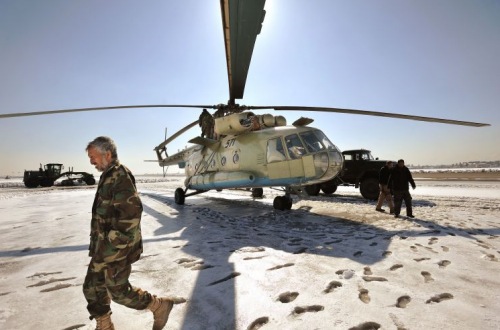
O renascimento da Força Aérea Afegã

nyt-mi-17-1

O coronel James A. Brandon pilotava Black Hawks quando Moscou era considerada uma inimiga mortal dos Estados Unidos e ele passou anos no exército estudando aeronaves inimigas. Desta forma, Brandon acha meio bizarro o fato de estar pilotando um velho helicóptero russo MI-17, um legado dos invasores soviéticos aqui, no Hindu Kush do Afeganistão.

Se na década de 1980 alguém me dissesse que eu estaria pilotando um MI-17 vinte anos mais tarde, eu chamaria essa pessoa de maluca“, disse Brandon na semana passada.

Mas, neste caso, em que se vai à guerra não só com as forças armadas que se tem, mas com as forças armadas que o seu inimigo tinha no passado, Brandon é um dos líderes de uma acidentada iniciativa norte-americana para criar uma força aérea afegã a partir da estaca zero. Para fazer isso da forma mais rápida e (relativamente) barata possível, os Estados Unidos estão treinando pilotos norte-americanos para operarem helicópteros da antiga União Soviética - Brandon os chama de “caminhões voadores” - de forma que os pilotos norte-americanos possam, por sua vez, treinar, ou retreinar, os pilotos afegãos que já trabalharam para os russos, o Taleban ou poderosos chefes tribais.

O programa, que foi projetado para custar ao contribuinte norte-americano US$ 5 bilhões até 2016, tem como objetivo conferir ao Afeganistão a capacidade de defender-se a partir do céu, e permitir que um dia os norte-americanos saiam do país. Mas, por ora, a iniciativa é um reflexo de todos os problemas encontrados ao se tentar fazer com que as forças afegãs atuem por conta própria. “Temos um longo caminho pela frente”, diz o brigadeiro Walter D. Givhan, da Força Aérea dos Estados Unidos, o comandante geral do programa, que supervisiona oito pilotos-instrutores norte-americanos e as 33 aeronaves da Força Aérea Afegã, que nem sempre estão em condições de serem operadas.

Um dos problemas é que muitos dos cerca de 80 pilotos afegãos que estão sendo treinados não falam inglês, o que é um grande obstáculo quando os instrutores norte-americanos gritam ordens para eles nos helicópteros que pairam sobre Cabul. Na apertada cabine do MI-17 não há espaço para um intérprete, e, ainda que houvesse, as coisas geralmente acontecem muito rápido.

“Não temos tempo para pedir a um tradutor que diga, ‘Não se choque contra aquela montanha’”, diz o tenente-coronel Todd Lancaster, comandante do esquadrão de helicópteros do 438º Grupo Expedicionário Aéreo, a unidade norte-americana que está construindo aquilo que é oficialmente denominado Corpo Aéreo do Exército Nacional Afegão.

Um voo de treinamento na semana passada para praticar “passagens com armas” de helicóptero no céu frio e de uma claridade brilhante perto de Cabul foi um exemplo dos problemas enfrentados. O tenente-coronel Joshua Jones, um piloto de Fort Rucker, no Estado do Alabama, instruía Bakhtyar Bakhtullah, um coronel da força aérea afegã, em manobras de revirar o estômago, de forma que o operador de armamentos pudesse praticar disparos de metralhadora através das portas dos helicópteros. O alvo era um veículo blindado abandonado no vale lá embaixo.

Mas quando Bakhtullah, um dos melhores pilotos afegãos, deu uma guinada súbita para a esquerda, a sua manobra foi instável - moderadamente apavorante poderia ser uma forma melhor de defini-la - o que foi o resultado, conforme Jones disse mais tarde, do uso exagerado do pedal do rotor da cauda, e da pouca utilização do manche de controle do helicóptero.

Jones, que vinha usando principalmente sinais com a mão para comunicar-se com Bakhtullah na cabine, decidiu que tentaria explicar o procedimento mais tarde com um intérprete em terra. “Não deu para consertar esse erro hoje”, afirmou ele. “A questão era muito técnica”.

nyt-mi-17-2

No passado os norte-americanos já aprenderam a pilotar helicópteros MI-17, principalmente para exercícios militares com o objetivo de ensiná-los como fazer frente a aeronaves inimigas (o MI-17 é utilizado por diversos países em todo o mundo, incluindo o Irã e a Coreia do Norte). O programa afegão se baseia em uma tentativa norte-americana anterior de criar a força aérea iraquiana, que também possui alguns MI-17. Mas os helicópteros russos, que compõem a maior parte da frota afegã, têm uma ressonância irônica em um país no qual, nas década de oitenta, os Estados Unidos forneceram a grupos guerrilheiros mísseis Stinger para o abate de aeronaves soviéticas.

Atualmente, os pilotos norte-americanos encontram algum ressentimento por parte de afegãos que pilotam os helicópteros russos há décadas - Bakhtullah é piloto desde 1981 -, e que questionam por que precisam receber instruções de norte-americanos que acabaram de aprender a pilotar esses helicópteros em um curso de quatro semanas em Fort Bliss, no Texas. Os norte-americanos dizem que os afegãos não contam com uma força aérea de verdade desde que os russos partiram há duas décadas, e que eles receberam, desde o princípio, um treinamento impróprio.

Mas Jones diz entender o ponto de vista afegão, e tenta fazer sugestões, e não apresentar exigências. “Nós estamos realmente tentando não aparecer como heróis conquistadores”, afirma ele.

Os pilotos afegãos reclamam também dos salários, que variam de US$ 200 a US$ 300 mensais, e que são pagos pela força aérea afegã. “Ninguém se importa conosco”, queixa-se Ehsan Ehsanullah, um dos melhores pilotos afegãos, após um voo de treinamento na semana passada. Ele diz que ganhava mais dinheiro na década de noventa, quando pilotava para o Taleban.

O maior problema é que as demandas da guerra implicam na redução daquilo que os norte-americanos consideram horas de treinamento vitais. Eles contam que algumas vezes chegam para uma sessão de treinamento agendada e descobrem que o helicóptero precisa ser usado naquele momento para o transporte de tropas ou cargas para Kandahar. No mês passado, um desses voos terminou em desastre, quando um MI-17 pilotado por dois afegãos caiu na província de Herat, matando dois dos 13 afegãos a bordo.

(As regras militares exigem que os pilotos dos Estados Unidos operem os MI-17 se houver norte-americanos a bordo, e os pilotos norte-americanos só podem pilotar os MI-17 que possuem peças certificadas e que passam por manutenção norte-americana. O helicóptero de treinamento de Jones é um MI-17 de segunda mão comprado da República Tcheca para o Afeganistão).

Um fator positivo é o novo quartel general de US$ 183 milhões da força aérea afegã, pago pelos norte-americanos. Ela conta com dois hangares, dormitórios, uma unidade médica e escola de inglês. Em uma instalação próxima são fornecidas aulas de manutenção de helicópteros.

Em uma manhã da semana passada, Robert Luna um civil norte-americano contratado de Fort Bliss, dava uma aula aos afegãos sobre o painel de controle de eletricidade do MI-17. Ele disse que dá aulas sobre o MI-17 aos norte-americanos em Fort Bliss desde 1999. “Sabe como é. Na época a ideia era, ‘Conheça o seu inimigo’”, explica Luna. “Mas agora é, ‘Ensine os seus aliados’”.

Givhan continua otimista em relação ao programa, que no final do ano passado treinou os afegãos para transportar o seu presidente, Hamid Karzai, em helicópteros MI-17 especiais. Antes disso, eram os norte-americanos que transportavam Karzai de helicóptero para toda parte. “O programa é a nossa passagem de saída daqui“, afirma Givhan.

FONTE: The New York Times


Saturday, February 28, 2009 | Posted in | Read More »

Brasil - A-1 serão modernizados na França?

O Diário Oficial da União trouxe em sua edição de 20 de fevereiro deste ano, um dia após o anúncio das demissões de 4.273 empregados pela Embraer, a publicação do extrato de dispensa de licitação, número 1/2009, no qual contrata a Embraer Aviation International, subsidiária sediada na França, para reformar 43 aeronaves AMX da Força Aérea Brasileira (FAB). O valor do negócio é de US$ 147.565,954,11.

A nova negociação não foi divulgada pela direção da Embraer nem pelo Comando da Aeronáutica. O secretário-geral do Sindicato dos Metalúrgicos de São José dos Campos, Luis Carlos Prates, estranhou o fato de o Diário Oficial só informar a dispensa de licitação para a contratação na sexta-feira de Carnaval, um dia após anúncio das demissões. O sindicalista também contesta o fato do negócio envolver uma subsidiaria fora do Brasil.

O processo de contratação, identificado pela numeração 017-08/SDDP, tem como função a aquisição de equipamentos para a modernização das 43 caças subsônicos fabricados pela Embraer em parceria com a Itália, denominado também como A-1. A Empresa Brasileira de Aeronáutica (Embraer) aparece no contrato como anuente solidária.

Está nas mãos do brigadeiro do Ar, Dirceu Tondolo Nôro, a dispensa de licitação e a contratação direta da Embraer francesa. Nôro ocupa o cargo de subdiretor de Desenvolvimento e Programas (SDDP) e presidente da Comissão Coordenadora do Programa Aeronave de Combate (Copac).

O acordo foi ratificado pelo comandante da Aeronáutica, tenente-brigadeiro do Ar, Juniti Saito, sob a justificativa de elevar a “capacidade operacional e de sobrevivência das aeronaves A-1, colocando-as em condições de emprego”.

O valor da negociação é de US$ 147.565,954,11 e tem amparo legal no artigo 24, IX, da Lei 8.666/1993 combinado com o artigo 1º, I, do Decreto nº 2.295, de 05 de agosto de 1997.

A presença da Embraer na Europa vem desde 1983, quando foi criada a Embraer Aviation International, uma subsidiaria situada em Paris e estabelecida para cuidar das atividades de marketing e venda, armazenamento, gestão de logística e de reparo de componentes.

Em episódios anteriores em que o caça AMX necessitou de reparos, a manutenção foi feita na sede da empresa, em São José dos Campos, no interior de São Paulo. O procedimento foi repetido, inclusive, em 2007, quando a FAB iniciou junto à Embraer o processo de modernização dos aparelhos.

A unidade na França foi a segunda instalação da Embraer fora do Brasil, após o estabelecimento da Embraer Aircraft Corporation (EAC), em 1979, nos Estados Unidos.

Procurados ontem pela reportagem da Gazeta Mercantil, a Embraer e o Comando da Aeronáutica não se manifestaram.

FONTE: Gazeta Mercantil


Saturday, February 28, 2009 | Posted in | Read More »

Brasil - Gol lança versão virtual do Cartão Voe Fácil para incrementar vendas

Com o objetivo de estimular as vendas à prazo, a Gol acaba de lançar no mercado seu cartão Voe Fácil, desta vez com versão virtual e acesso pela internet. Basta ter o cadastro aprovado pela empresa e o passageiro já poderá utilizar cartão através do site da companhia.

Para visualizar o cartão, acesse www.voegol.com.br, clique na opção Voe Fácil e insira o número de seu CPF e sua senha de acesso. Na hora da compra, basta acessar o site que o cartão estará lá, na tela do computador, pronto para ser utilizado. Caso o passageiro prefira ter o cartão em mãos, é só imprimir.


A senha de compra continará sendo enviada pelo correio mas o cartão deverá ser desbloqueado para uso. A Central de Desbloqueio funciona 24 horas, pelo telefone: 0300 789 7141.Mesmo quem já tem o Cartão Voe Fácil ou tenha solicitado 2ª via, a versão eletrônica também estará no site.


Saturday, February 28, 2009 | Posted in | Read More »

Airbus delivers 500th A321

27 February 2009

Most efficient aircraft in its class

Airbus has delivered the 500th A321 ever produced. The aircraft was handed over to Air France at Airbus' Delivery Centre in Hamburg. The A321 is the largest member of the best selling A320 Family. It is the most efficient single-aisle aircraft in its segment.

Air France's A321 is equipped with Airbus' enhanced single-aisle cabin and can accommodate 174 passengers in a comfortable two-class layout. The aircraft is powered by CFM 56-5B/3 engines.

"Air France was the first airline to operate the A320 and in our 75th anniversary year we are pleased to be receiving the 500th A321, the largest member of the family. Air France was also the first major airline to operate all four members of the A320 Family in 2003 and they have served us on our medium haul network and will continue to do so", said Pierre Vellay, Senior VP New Aircraft and Corporate Fleet Planning Air France.

"We are delighted that Air France continues to renew its medium haul fleet with A321s; the preferred aircraft on medium range high-density routes," said John Leahy, Airbus Chief Operating Officer, Customers. "Airbus invests around 100 million Euros every year to keep the A320 the most eco-efficient single aisle aircraft in the world. Reaching the milestone of 500 deliveries proves the sustainability of these investments and underlines the leading position of the A321 in its market segment in terms of operational efficiency, passenger comfort and environmental friendliness."

The first A321 was delivered in 1994, as well as the first one to the Air France Group. Today Airbus has sold more than 750 A321s to about 65 customers all around the world.

While passengers are benefiting from a state of the art cabin design, wider seats, wider aisles and bigger overhead stowage, airlines profit from the unique operational flexibility of Airbus single-aisle aircraft.

Only Airbus-single aisle aircraft, like the A321, are able to accommodate containerised cargo thus adding profitability to airline operations. Airlines using the cargo system are minimizing turn around times and are able to easily exchange containers from its single-aisle operations into wide body aircraft operations. This increases efficiency in connecting international air-cargo transport and reducing the risk of damaging goods.

Commonality within the Airbus fly-by-wire product line also contributes to the A320 Family's economics. The ability to use a single pool of pilots, cabin crew and maintenance personnel for the A318, A319, A320 and A321 saves money and gives airlines maximum flexibility in scheduling and planning.


Saturday, February 28, 2009 | Posted in | Read More »

Airbus livre le 500ème A321

27 February 2009

L’appareil le plus rentable de sa catégorie

Airbus a livré le 500ème A321. Cet appareil a été remis à Air France, depuis le centre de livraison Airbus de Hambourg. L’A321, appareil de plus grande capacité de la famille A320 best-seller, est le monocouloir le plus rentable de sa catégorie.

Cet A321 d’Air France, équipé des réacteurs CFM 56-5B/3 et doté de la cabine monocouloir ‘Enhanced’ d’Airbus, peut accueillir 174 passagers dans un aménagement bi-classe confortable.

“Air France a été la première compagnie à exploiter l’A320, et nous sommes heureux de recevoir le 500ème A321, appareil de plus grande capacité de cette famille, l’année de notre 75ème anniversaire. Air France a également été la première compagnie majeure à exploiter en 2003 les quatre appareils de la famille A320. Nous les exploitons et continuerons à les exploiter sur notre réseau de lignes moyen-courriers”, a déclaré Pierre Vellay, Directeur de la Flotte et des Avions Nouveaux d’Air France.

“Nous sommes heureux qu’Air France poursuive le renouvellement de sa flotte moyen-courrier avec des A321, appareils de prédilection sur les lignes moyen-courriers à forte densité de trafic”, a déclaré John Leahy, Chief Operating Officer Customers d’Airbus. “Airbus investit quelque 100 millions d’Euros chaque année, afin que l’A320 reste le monocouloir le plus éco-efficient au monde. Cette 500ème livraison démontre le bien-fondé de ces investissements, et met en lumière la place de leader de l’A321 sur son segment de marché en termes de rentabilité opérationnelle, confort passagers et respect de l’environnement.”

Le tout premier A321 a été livré en 1994, année au cours de laquelle le Groupe Air France a également reçu son premier exemplaire de ce type d’appareil. A ce jour, Airbus a vendu plus de 750 A321 à quelque 65 clients dans le monde.

A bord des appareils de la famille A320, les passagers bénéficient d’une cabine de conception avancée, de sièges et couloirs plus larges et de coffres à bagages plus grands. Les compagnies tirent profit, pour leur part, de la souplesse opérationnelle unique aux monocouloirs Airbus.

Seuls les monocouloirs Airbus tels que l’A321 peuvent accueillir du fret conteneurisé, pour une meilleure rentabilité. Les compagnies utilisant ce système de chargement de fret réduisent leurs temps de rotation et peuvent transférer aisément leurs conteneurs d’un monocouloir à un gros-porteur. Ce système permet une meilleure efficacité au niveau du chargement du fret et réduit les risques d’endommagement des marchandises.

La communité entre les appareils Airbus dotés de commandes de vol électriques contribue également à la rentabilité de la famille A320. La possibilité d’affecter aux A318, A319, A320 et A321 les mêmes équipages, personnels navigants commerciaux et techniciens de maintenance permet de réaliser des économies et donne aux compagnies une plus grande souplesse dans la planification de leurs équipages et flottes.


Saturday, February 28, 2009 | Posted in | Read More »

Airbus liefert 500. A321 aus

27 February 2009

Effizientestes Flugzeug seiner Klasse

Airbus hat die 500. produzierte A321 ausgeliefert. Der Single-Aisle-Jet wurde vom Airbus-Auslieferungszentrum in Hamburg an Air France übergeben. Die A321 ist das größte Modell der überaus erfolgreichen Airbus A320-Familie und das effizienteste Standardrumpfflugzeug in seinem Marktsegment.

Die A321 für Air France wurde mit der optimierten Single-Aisle-Kabine von Airbus ausgestattet und bietet in einer komfortablen Zweiklassen-Konfiguration 174 Passagieren Platz. CFM 56 5B/3-Triebwerke von CFM International sorgen für den Schub.

„Air France war die erste Fluggesellschaft, die die A320 in Dienst gestellt hat. Wir freuen uns diese 500. A321, als größte Mitglied der Airbus A320-Familie, im Jahr unseres 75. Gründungsjubiläums zu erhalten. Air France war 2003 auch die erste großen Fluggesellschaft, die alle vier Modelle der A320-Familie im Einsatz hat. Die Airbus-Jets haben uns in unserem Mittelstreckennetz gute Dienste geleistet und werden dies auch weiterhin tun“, sagte Pierre Vellay, Senior VP New Aircraft and Corporate Fleet Planning von Air France.

„Wir freuen uns sehr darüber, dass Air France seine Mittelstreckenflotte weiter mit der A321 erneuert, dem bevorzugten Flugzeug für Mittelstreckenrouten mit hohem Verkehrsaufkommen“, sagte John Leahy, Chief Operating Officer Customers von Airbus. „Airbus investiert jedes Jahr rund 100 Millionen Euro, um sicherzustellen, dass die A320 auch weiterhin das ökoeffizienteste Single-Aisle-Fugzeug der Welt bleibt. Der Meilenstein der 500. Auslieferung belegt die Nachhaltigkeit dieser Investitionen und unterstreicht die Tatsache, dass die A321 in ihrem Marktsegment in Bezug auf Wirtschaftlichkeit, Passagierkomfort und Umweltfreundlichkeit weiterhin führend ist.“

Die erste A321 wurde 1994 ausgeliefert, wie auch das erste Flugzeug dieses Typs für die Air France Group . Bis heute hat Airbus mehr als 750 A321 an rund 65 Kunden in aller Welt verkauft.

Die Passagiere kommen an Bord in den Genuss breiterer Sitze, breiterer Gänge und geräumigerer Gepäckablagefächer, während die Betreiber von der besonderen Betriebsflexibilität der Single-Aisle-Flugzeuge von Airbus profitieren.

Hinzu kommt, dass nur Airbus Single-Aisle-Flugzeuge wie die A321 Standard-Frachtcontainer aufnehmen können und damit die Rentabilität des Airline-Betriebs noch erhöhen. Das Containerladesystem ermöglicht den Betreibern die Minimierung ihrer Abfertigungszeiten und die einfache Umladung von Containern aus Standardrumpf- in Großraumflugzeuge. Dies erhöht die Effizienz des Frachtumschlags bei Anschlussflügen im internationalen Frachtverkehr und reduziert das Risiko von Beschädigungen des Frachtguts.

Die Kommunalität zwischen allen Fly-by-Wire-Flugzeugen von Airbus trägt ebenfalls zur Wirtschaftlichkeit der A320-Familie bei. Die Modelle A318, A319, A320 und A321 können mit dem gleichen Pool von Piloten, Kabinenpersonal und Wartungstechnikern betrieben werden, was Geld spart und den Airlines maximale Planungs- und Einteilungsflexibilität bietet.


Saturday, February 28, 2009 | Posted in | Read More »

Airbus entrega el A321 número 500

27 February 2009

El avión más eficiente en su clase

Airbus ha entregado su A321 número 500. El avión fue entregado a Air France en el Centro de Entregas de Airbus en Hamburgo. EL A321 es el mayor miembro de la exitosa Familia A320. Es el avión de pasillo único más eficiente en su segmento.

El A321 de Air France está equipado con la cabina mejorada para pasillo único de Airbus, y puede acomodar a 174 pasajeros en una confortable configuración en dos clases. El avión está propulsado por motores CFM 56-5B/3.

“Air France fue la primera línea aérea en operar el A320 y en nuestro 75 aniversario estamos encantados de recibir el A321 número 500, el miembro más grande de la familia. Air France fue también la primera gran línea aérea en operar los cuatro miembros de la Familia A320, en 2003, y nos han servido en nuestras rutas de alcance medio, y continuarán haciéndolo”, dijo Perre Velay, Vicepresidente Senier de Nuevos Aviones y Planificación Corporativa de Flota de Air France.

“Estamos encantados de que Air France continúe renovando su flota de alcance medio con Airbus A321, el avión preferido para rutas medias de alta densidad”, dijo John Leahy, Director del Área de Clientes de Airbus. Airbus invierte 100 millones de euros anuales para mantener al A320 como el avión de pasillo único más eco-eficiente del mundo. Al alcanzar el hito de las 500 entregas se prueba la sostenibilidad de estas inversiones y subraya la posición de liderazgo del A321 en su segmento de mercado en términos de eficiencia operacional, comodidad del pasajero y respeto al medio ambiente”.

El primer A321 fue entregado en 1994, así como el primero para el Grupo Air France. Actualmente, Airbus ha vendido más de 750 A321 a unos 65 clientes en todo el mundo.

Mientras que los pasajeros disfrutan de un diseño actualizado de la cabina, asientos y pasillos más amplios y maleteros superiores más capaces, las líneas aéreas se benefician de la singular flexibilidad operacional de los aviones Airbus de pasillo único.

Únicamente los aviones de pasillo único de Airbus, como el A321, pueden transportar carga en contenedores, lo que añade rentabilidad a la operación de la línea aérea. Las líneas aéreas que utilizan el sistema de carga, minimizan los tiempos de rotación y pueden cambiar fácilmente contenedores entre sus aviones de pasillo único y los de fuselaje ancho. Esto incrementa la eficiencia en las conexiones de tráfico internacional de carga y reduce el riego de deterioro de los bienes transportados.

La “comunalidad” dentro de la línea de productos “Fly-by-wire” de Airbus también contribuye a la economía de la Familia A320. La capacidad de utilizar un único equipo de pilotos, tripulantes de cabina y personal de mantenimiento para los A318, A319, A320 y A321, ahorra dinero y da a las líneas aéreas la máxima flexibilidad en planificación y programación.


Saturday, February 28, 2009 | Posted in | Read More »

Korean Air adquiere seis A330-200 adicionales

27 February 2009

Primera en solicitar la nueva versión de alcance extendido

Korean Air ha colocado un nuevo pedido en firme con Airbus para seis A330-200 adicionales. El pedido es el primero de la nueva versión de 238 toneladas de peso al despegue incrementado, de este popular birreactor de fuselaje ancho, que ofrece una extensión del alcance hasta las 7.200 millas náuticas.

Previsto para su entrega a partir de 2010, los nuevos aviones incorporarán una configuración en tres clases que ofrece gran comodidad, y serán utilizados en servicios a larga distancia desde Seúl a Europa y América del Norte. El nuevo pedido incrementa el número total de A330 solicitados por Korean hasta los 25 aviones, que incluyen 16 A330-300 y nueve A330-200.

“Nuestro último pedido de A330 forma parte de nuestro plan de expansión continua, y nos permitirá abrir nuevas rutas de largo alcance”, dijo Yang Ho Cho, Presidente y CEO de Korean Air. “La última versión del avión es una opción incluso más atractiva para unir Incheon de forma eficiente y económica con Europa y a destinos a través del Pacífico”.

"Este nuevo pedido de Korean Air subraya el continuado éxito del A330 con las principales líneas aéreas del mundo”, dijo John Leahy, Director del Área de Clientes de Airbus. “La economía de operación sin parangón y el probado atractivo para el pasajero del avión, junto a la capacidad de alcance extendido, lo convierten en la elección perfecta en el mercado actual para rutas de capacidad media tanto en servicios regionales como de largo alcance”.

El birreactor A330 es uno de los aviones de fuselaje ancho en servicio actualmente de más amplia utilización. Hasta el momento, Airbus ha conseguido más de 1.000 pedidos de las diversas versiones del avión. Más de 550 A330 han sido ya entregados y el avión vuela actualmente con más de 70 líneas aéreas en todo el mundo.


Saturday, February 28, 2009 | Posted in | Read More »

Korean Air bestellt sechs weitere Airbus A330-200

27 February 2009

Erste Order für neue Version mit größerer Reichweite

Korean Air hat bei Airbus sechs weitere A330-200 fest in Auftrag gegeben. Dies ist die erste Order für die neue Version des erfolgreichen zweistrahligen Großraumjets mit einem höheren Startgewicht von 238 Tonnen und einer größeren Reichweite von 7.200 nm.

Die neuen Airbus-Jets sind zur Auslieferung ab 2010 vorgesehen. Sie erhalten eine überaus komfortable Kabinenkonfiguration mit drei Klassen und sollen künftig Langstreckenverbindungen zwischen Seoul und Europa bzw. Nordamerika bedienen. Korean Air hat mit dieser neuen Bestellung jetzt insgesamt 25 A330 bei Airbus in Auftrag gegeben (16 A330-300 und neun A330-200).

„Unsere jüngste A330-Order wird uns die Eröffnung neuer Langstreckenrouten ermöglichen und ist Teil unserer laufenden Expansionspläne“, sagte Yang Ho Cho, Chairman und CEO von Korean Air. „Die neueste Version dieses Flugzeugs bietet eine noch attraktivere Option für die effiziente und wirtschaftliche Verbindung von Incheon mit Europa sowie für die transpazifischen Destinationen.“

„Dieser neue Auftrag von Korean Air unterstreicht den fortgesetzten Erfolg der A330 bei den weltweit führenden Airlines“, sagte John Leahy, Chief Operating Officer Customers von Airbus. „Die unschlagbare Wirtschaftlichkeit dieses Flugzeugs und seine nachweislich hohe Attraktivität für die Passagiere machen die A330 mit ihrer jetzt noch größeren Reichweite zur idealen Lösung für den gegenwärtigen Regional- und Langstreckenmarkt auf Routen mittlerer Kapazität.“

Die zweistrahlige A330 ist eines der heute am weitesten verbreiteten Großraumflugzeuge. Airbus hat bisher mehr als 1.000 Aufträge für die verschiedenen Versionen dieses Produkts entgegengenommen. Mehr als 550 A330 sind bereits ausgeliefert und fliegen bei über 70 Airlines in aller Welt.


Saturday, February 28, 2009 | Posted in | Read More »

Korean Air fait l’acquisition de six A330-200 supplémentaires

27 February 2009

Première compagnie à faire l’acquisition de la nouvelle version dotée d’un rayon d’action accru

Korean Air a signé un contrat avec Airbus portant sur la commande ferme de six A330-200 supplémentaires. C’est la première commande portant sur la nouvelle version du gros-porteur biréacteur très prisé doté d’une masse accrue au décollage de 238 tonnes et d’un rayon d’action étendu, allant jusqu’à 7 200 nm.

Livrables à compter de 2010, ces appareils, dotés d’un aménagement triclasse très confortable, seront exploités sur les lignes long-courriers reliant Séoul à l’Europe et à l’Amérique du Nord. Cette nouvelle commande porte le nombre total d’A330 commandés par Korean Air à 25 exemplaires, dont 16 A330-300 et neuf A330-200. "Notre nouvelle commande d’A330, qui fait partie de notre programme de développement continu, nous permettra d’ouvrir de nouvelles lignes long-courriers", a déclaré Yang Ho Cho, Chairman et CEO de Korean Air. "En outre, la nouvelle version de cet appareil représente une solution très intéressante pour desservir de façon rentable et efficiente l’Europe et la région Pacifique au départ d’Incheon."

"Cette nouvelle commande émanant de Korean Air souligne le succès constant de l’A330 auprès des compagnies leaders dans le monde", a pour sa part souligné John Leahy, Chief Operating Officer Customers d’Airbus. "La rentabilité opérationnelle inégalée de cet appareil et son confort qui a fait ses preuves, associés à son rayon d’action accru, en font l’appareil idéal sur le marché actuel des lignes de moyenne capacité."

Le biréacteur A330 est l’un des gros-porteurs les plus exploités dans le monde à l’heure actuelle. Airbus totalise à ce jour plus de 1 000 commandes portant sur les différentes versions de cet appareil. Plus de 550 A330 ont d’ores et déjà été livrés et sont en service auprès de plus de 70 compagnies aériennes dans le monde.


Saturday, February 28, 2009 | Posted in | Read More »

Korean Air orders six more A330-200s

27 February 2009

Airline first to order new version with extended range

Korean Air has placed a new firm order with Airbus for six more A330-200 aircraft. The order is the first for the new 238 tonne increased take-off weight version of the popular twin-engine widebody, offering an extended flying range of up to 7,200 nautical miles

Scheduled for delivery from 2010, the new aircraft will feature a high comfort three-class layout and will be used on long-range services from Seoul to Europe and North America. The new order increases the total number of A330s ordered by Korean Air to 25, comprising 16 A330-300s and nine A330-200s.

"Our latest order for the A330 is part of our ongoing expansion plan and will enable us to open up new long haul routes," said Yang Ho Cho, Chairman and CEO of Korean Air. "The latest version of the aircraft is an even more attractive option for linking Incheon efficiently and economically with Europe and destinations across the Pacific."

"This new order from Korean Air underscores the ongoing popularity of the A330 with the world's leading airlines," said John Leahy, Airbus Chief Operating Officer, Customers. "The unbeatable economic efficiency and proven passenger appeal of the aircraft, combined with its extended range capability, make it the perfect choice in today's market for medium capacity routes."

The twin engine A330 is one of the most widely used widebody aircraft in service today. To date, Airbus has won more than 1,000 orders for the various versions of the aircraft. More than 550 A330s have already been delivered and the aircraft is currently flying with over 70 airlines worldwide.


Saturday, February 28, 2009 | Posted in | Read More »

La Red MRO de Airbus da la bienvenida como nuevo miembro a Mexicana MRO Services

27 February 2009

Mexicana MRO Services se une hoy a la red mundial MRO de Airbus. La ceremonia oficial de firma tuvo lugar en la sede de Mexicana en Ciudad de México, ante la presencia del Ing. Manuel Borja, Director General de Mexicana y del señor Bruce Jones, Vicepresidente Mundial Senior de Servicios y Apoyo al Cliente de Airbus. Mexicana MRO Services es una división del Grupo Mexicana de Aviación S.A. de C.V. con sede en el aeropuerto internacional de Ciudad de México. Se apoya en la experiencia de ofrecer servicios integrados de mantenimiento a Mexicana, y está situada estratégicamente el centro del continente americano.

La Red MRO de Airbus ha sido diseñada para ofrecer a sus clientes una elección de servicios de mantenimiento a nivel mundial, competitiva y de calidad, por parte de proveedores de MRO con experiencia en aviones Airbus. Desde su lanzamiento en marzo de 2005, Airbus ha estado trabajando con los miembros de la Red MRO para establecer niveles de rendimiento para la eficiencia del mantenimiento y la satisfacción del cliente. Los miembros de la Red MRO también trabajan con Airbus en su nuevo papel como un integrador de Servicios por Hora de Vuelo (FHS) para los clientes.

El Ing. Borja comentó: “Contar con el prestigio, la garantía y estatus que nos otorga el formar parte de esta exclusiva red y tener la promoción a nivel mundial por parte del fabricante de aviones Airbus, indudablemente redundará en la ampliación de mercado para los servicios de mantenimiento que desde 1993 brindamos a aviones Airbus tanto de Mexicana como de otros operadores”.

Por su parte, Bruce Jones dijo: “Tenemos el gran placer de dar la bienvenida a Mexicana MRO Services como miembro experimentado y valorado de la Red MRO de Airbus. América Latina es una región en la que Airbus está experimentado un fuerte crecimiento en el número de nuevos clientes y en la demanda de nuestros aviones. La adición de Mexicana MRO Services a la Red MRO de Airbus mejora para los clientes la posibilidad de elección de proveedores de MRO competitivos y con experiencia en la región”.

La Red MRO de Airbus cuenta ahora con los 15 miembros siguientes:

Aeroman
Air France Industries
Air New Zealand Engineering Services
Aveos
GAMECO
Hong Kong Aircraft Engineering Company
Iberia Maintenance
Lufthansa Technik AG
Mexicana MRO Services
Sabena Technics
SIA Engineering Company
Singapore Technologies Aerospace
SR Technics Switzerland
TAP Maintenance & Engineering
TIMCO Aviation Services


Saturday, February 28, 2009 | Posted in | Read More »

◄ Share this news!

Bookmark and Share

Advertisement


The Manhattan Reporter

Recently Added

Recently Commented